

Surin Local Silk: A Living Heritage of Craftsmanship
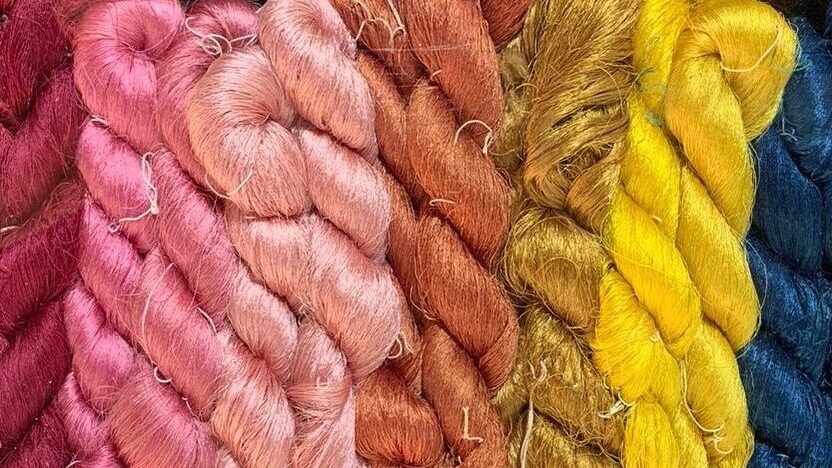
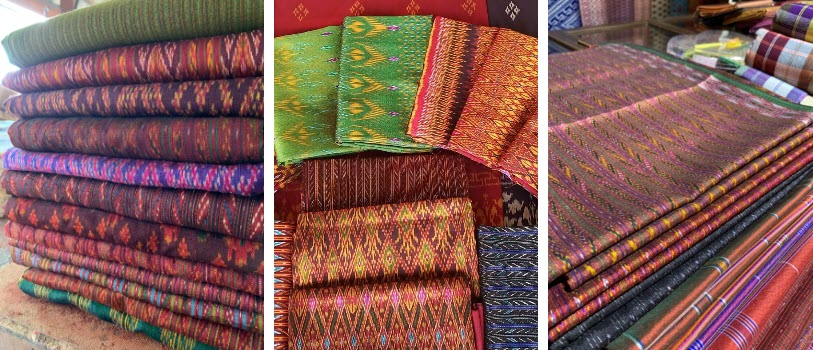
Surin’s weaving tradition, widely known as Surin Silk, is deeply rooted in history. Passed down through generations, local artisans use fine silk threads (Mai Noi), resulting in a fabric that is remarkably fluid, lightweight, and cool to wear—a distinct hallmark of Surin silk. Local villagers maintain traditional sericulture, raising unique yellow silkworm breeds. They preserve intricate ancestral techniques encompassing silkworm rearing, mudmee (tie-dye) pattern binding, natural dyeing, and weaving. While maintaining ancient motifs, vibrant colors, and meticulous craftsmanship, Surin’s diverse ethnic communities express unique variations in weaving methods, patterns, color schemes, and materials, while continuously innovating to match modern trends.
The art of Surin silk shares a contemporary historical link with ancient Khmer heritage. Dating back to historical silk route connections extending from Surin to Cambodia, traditional motifs such as the “Phra Tabong” pattern (originating from Khmer roots) are still actively produced today. This blend of local wisdom and master craftsmanship adds immense value, earning widespread recognition and establishing Surin as one of Thailand’s premier silk-producing regions with an unbroken cultural legacy.
Surin silk stands out from other provinces because it encompasses virtually every traditional weaving technique found in Thailand. Beyond standard tie-dye patterns, Surin features numerous unique and complex designs found nowhere else, resulting in a diverse portfolio of signature patterns. Artisans continuously innovate through sophisticated techniques, such as combining mudmee tie-dyeing with supplementary warp or pattern-lifting (Yok Dok) in a single process. This creates exceptionally dense, high-value textiles requiring advanced mastery—a specialized method uniquely practiced here in Thailand.
To honor and advance the royal aspirations of Her Majesty Queen Sirikit The Queen Mother, the Province of Surin recognizes the immense value of this local textile heritage, which deserves preservation, promotion, and continuous transmission. Reflecting the distinct identity, lifestyle, traditions, and prominent history of Surin, the province officially declared 7 signature provincial silk patterns on January 26, 2022:
- Hol Cloth (Pha Hol)
- Amporam Cloth (Pha Amporam)
- Samor Cloth (Pha Samor)
- Anluysuim Cloth (Pha Anluysuim)
- Labeuk Cloth (Pha Labeuk)
- Sakoo Cloth (Pha Sakoo)
- Hang Krarok / Kaneo Cloth (Pha Hang Krarok)
From Local Weaving to a Sustainable Profession
Originally, once weaving was completed, relatively well-off villagers traded among themselves, or local merchants would visit individual homes to purchase textiles, loading them onto oxcarts to sell in town. By 1975, outsiders began visiting the village to purchase silk for resale. What started as household production and community-level bartering evolved into external commerce, introducing neighboring communities to the distinctive patterns and color tones that set Khwao Sinarin’s woven textiles apart from anywhere else.
In 1987, Her Royal Highness Princess Maha Chakri Sirindhorn visited the Khwao Sinarin community to observe the silk-weaving tradition firsthand. This marked a vital turning point that brought widespread recognition to the local silk, attracting Thai and international tourists to witness the production process and purchase authentic pieces. Later, the community joined the One Tambon One Product (OTOP) initiative, generating significantly higher incomes for local artisans through textile sales.
Weaving and the Economy of the Khwao Sinarin Community
In the early stages of Khwao Sinarin’s silk economy, transactions took place locally as middlemen entered the area to buy textiles for urban markets. With the arrival of Chinese settlers and the establishment of the railway, a commercial district emerged along the railway lines, facilitating the transport and distribution of woven fabrics to Bangkok and other provinces.
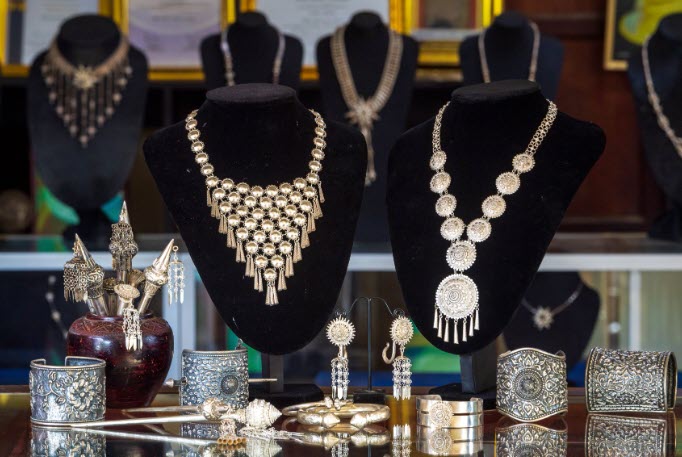
The golden age of the weaving economy arrived with government-backed OTOP projects, which substantially boosted community revenue and elevated the profile of both silk and silvercraft products. Middle-aged to elderly villagers began utilizing their spare time between farming duties to weave fabrics for OTOP shops and interested buyers.
Recently, Khwao Sinarin District has leveraged its weaving culture and silvercraft heritage to promote local tourism by organizing the annual festival titled “Nung Pha Mai Sai Prakeum Ruam Kantrum” (Wearing Silk, Wearing Silver Beads, and Dancing Kantrum) to honor and celebrate local wisdom. Today, silk remains both a vital economic commodity and a cultural treasure that continuously shapes the identity, livelihoods, and income of the community.
แหล่งที่มาของบทความ
https://www.eportfolio.in.th/surinsilk/
Distance from our accommodation: approximately 15 km (about 24-minute drive)
Google map